

If you’ve seen photos of a grassy headland rising dramatically above the Pacific Ocean near Lincoln City, there’s a good chance you’ve heard of God’s Thumb.
Located at the north end of Lincoln City, the God’s Thumb hike leads through coastal forest and open meadows before reaching one of the most recognizable viewpoints on this stretch of the Oregon Coast. The destination is a distinctive basalt formation high above the water, with sweeping views of the coastline along the way.
It’s a memorable hike, but it’s also one you should research before setting out. The route to God’s Thumb is not an officially maintained U.S. Forest Service trail. Parking is limited, and the final climb can be steep and dangerous, especially when Oregon Coast rain turns the trail muddy. Here’s what you need to know before hiking God’s Thumb in Lincoln City.
God’s Thumb hike at a glance
The exact mileage and elevation gain you’ll see online vary depending on the route being measured. Using the recommended access from The Knoll, plan for approximately:
- Distance: About 4.8 miles round trip
- Difficulty: Moderate overall, with a difficult final climb
- Trail type: Out and back
- Terrain: Forest trail, dirt, mud, grass, roots, and steep sections
- Best conditions: Dry weather – It can get muddy in the rainy season
- Parking: Limited
- Restrooms: None at the trailhead
- Trail fee: None
- Dogs: Keep dogs leashed and under control
The official God’s Thumb information site describes the route as roughly 4.8 miles and moderate, but there is an important distinction: the route beyond The Knoll is a user-made trail rather than an officially maintained U.S. Forest Service trail. The final approach to the top of God’s Thumb is narrow, steep, and potentially dangerous.
In other words, don’t let the relatively short mileage fool you into treating this like a casual walk on the beach. It’s a very moderate trek with some seriously incredible views.
Where is God’s Thumb?
God’s Thumb is located just north of Roads End at the northern edge of Lincoln City. The grassy basalt formation rises above the Pacific and is part of the Cascade Head Scenic Research Area within Siuslaw National Forest.
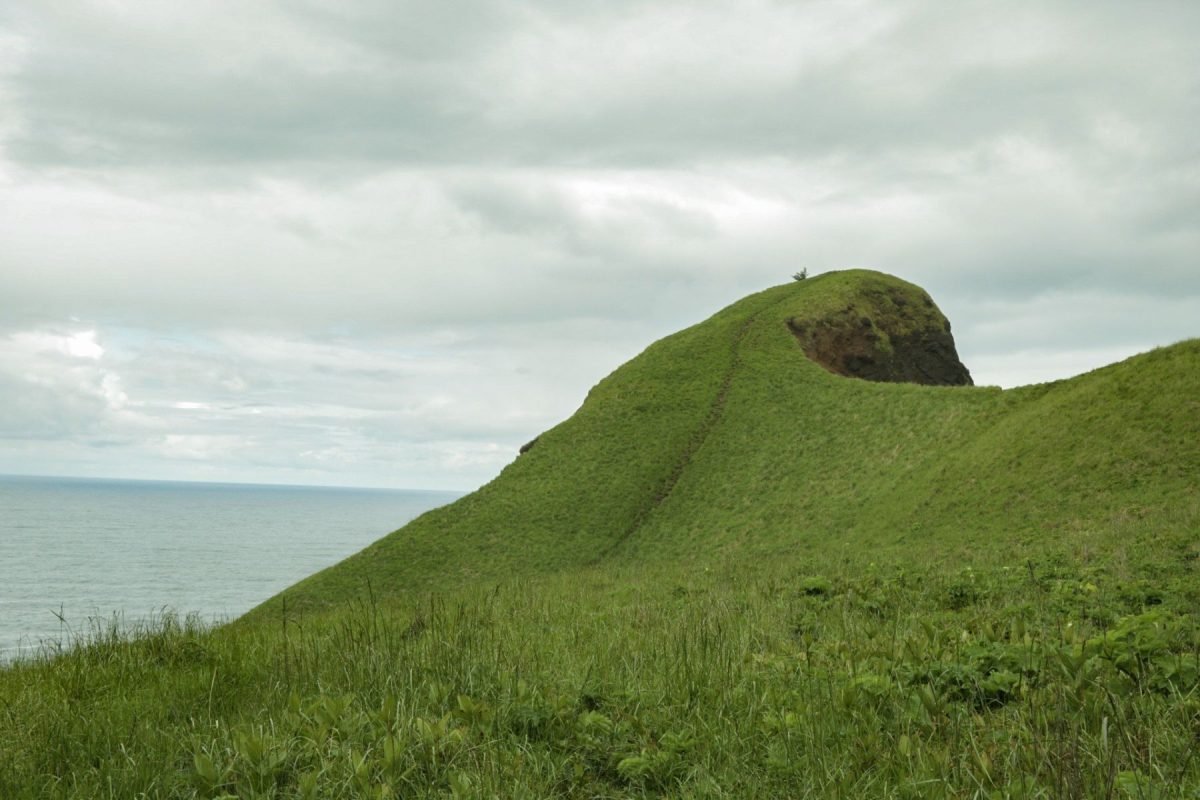
Interestingly, “God’s Thumb” isn’t an official geographic name. The formation has long been called God’s Thumb or The Thumb by locals and visitors because, from the right angle, the grassy promontory resembles a giant thumb sticking out toward the Pacific.
Whatever you call it, it’s hard to miss once it comes into view.
Where do you park for the God’s Thumb hike?
This is one of the most important things to know before you go. Older blogs, trail guides, and social media posts sometimes provide directions to God’s Thumb using Logan Road. Do not follow those directions.
There is no God’s Thumb trailhead at the end of Logan Road. Current guidance directs hikers to access God’s Thumb through The Knoll, using the official trailhead parking at the end of NE Devil’s Lake Boulevard.
A recent hiker on AllTrails shared this insider tip:
So first of all it’s 100% worth it. Something I wish I would’ve seen in the reviews is that there are three parking lots. The all trails address is set for the first parking lot which is the furthest away. If you park here, you have about 1/2 a mile of steep uphill that you could totally skip because you’re just walking on the road. The best to place to park is on parking lot 3, which is essentially just on the side of the road but the sign says you’re ok to park there. However if you do the whole thing like we did, the first mile is steep and then it’s “easier”.
Dennise Alvarado
The trailhead is in a residential area, so be especially mindful of where you park. Don’t block driveways, park on private property, or create your own parking space because the designated area is full.
Parking can be limited, particularly on busy summer weekends. Arriving earlier in the day or hiking on a weekday can make things easier.
And yes, this is one hike where typing an old trailhead into your GPS and assuming everything will work itself out is a bad strategy.
Starting the hike at The Knoll
From the NE Devil’s Lake Boulevard trailhead, begin by following the route toward The Knoll.
The Knoll is worth knowing about even if God’s Thumb is your ultimate destination. This open-space trail is maintained by the City of Lincoln City and leads hikers through coastal forest to a grassy viewpoint overlooking Lincoln City, Devils Lake, and the coastline.
It also gives you an excellent Plan B. If conditions aren’t cooperating, someone in your group has had enough climbing for the day, or you simply decide the final portion of God’s Thumb isn’t for you, The Knoll still delivers a worthwhile Oregon Coast hike and expansive views.
From The Knoll, hikers continuing toward God’s Thumb transition onto a user-made trail leading toward the High Meadow and eventually The Thumb. Unlike The Knoll trail, this portion is not an official U.S. Forest Service-maintained trail.
Stay on the established route. Portions of the hike cross private property through an easement, making it especially important to respect signs and property boundaries.
What is the God’s Thumb trail like?
One of the best things about the God’s Thumb hike is how much the scenery changes over a relatively short distance. As you begin among the dense greenery of the Oregon Coast, where forest surrounds portions of the route. As you gain elevation and continue toward the coast, the trees eventually give way to grassy openings and increasingly dramatic views.
Then God’s Thumb itself appears.
The rounded green formation sits above the Pacific with cliffs and ocean below. On a clear day, the surrounding viewpoints offer huge stretches of Oregon coastline, forested headlands, offshore rocks, and Lincoln City stretching south along the beach.
It feels surprisingly remote considering downtown Lincoln City is only a few miles away.
How difficult is the God’s Thumb hike?
Overall, the God’s Thumb hike is generally classified as moderate. The complete route includes sustained climbing, uneven terrain, roots, mud, and roughly several miles of hiking.
The final approach is a different story. Current trail guidance warns that the final path to the top of The Thumb is narrow and dangerous and notes that hikers have been seriously injured there.
The last climb is steep and exposed. Loose dirt, erosion, and mud can make footing considerably worse.
You don’t have to climb it. That’s worth emphasizing because reaching a viewpoint does not require proving anything to a piece of basalt. If the final climb looks beyond your ability, conditions are wet, you’re uncomfortable with heights, or something simply doesn’t feel right, enjoy the view from the meadow and turn around. You can see plenty without standing on the very top.
Is God’s Thumb dangerous?
It can be. The hike isn’t inherently an extreme backcountry expedition, but the combination of steep terrain, cliffs, erosion, mud, and changing coastal weather deserves respect.
The official trail information warns hikers to use extreme caution on the final climb and notes that people have suffered serious injuries attempting it.
Many people venture off the trail every year and end up seriously injured and/or needing to be rescued by the Coast Guard, so it’s absolutely essential for your safety to stay on the trail and be aware of your surroundings.
A few simple choices can make a major difference:
- Wear actual hiking shoes or boots with good traction.
- Stay away from cliff edges.
- Don’t attempt the final climb if you’re uncomfortable with the conditions.
- Keep children close near exposed areas.
- Keep dogs leashed.
- Give yourself enough daylight for the return hike.
- Bring water.
- Check the weather before leaving.
- Don’t rely solely on cell service for navigation.
- Turn around if conditions deteriorate.
Most importantly, don’t underestimate wet ground.
What happens when it rains?
Mud. Sometimes a lot of it.
The official God’s Thumb information specifically warns that the route can become extremely muddy and slippery after rain. That’s particularly important on the steep final sections, where wet soil can significantly reduce traction.
Lincoln City doesn’t exactly have a reputation for staying dry, so recent weather matters just as much as the forecast for the day of your hike. A sunny morning after several days of rain can still mean a muddy, slippery trail.
Water-resistant hiking shoes with good tread are a much better choice than everyday sneakers when conditions have been wet. It’s also not a terrible idea to leave a spare pair of shoes in the car. Your future self may appreciate it.
When is the best time to hike God’s Thumb?
God’s Thumb can be visited throughout the year, but conditions vary significantly by season.
Late spring through early fall generally gives hikers a better chance of encountering drier trails and clearer views. Summer also provides longer daylight hours, although it’s typically when the trail is busiest. Fall can be beautiful, particularly on a clear day, but increasing rainfall can make the trail slick.
Winter and early spring can bring significant mud, rain, wind, and rapidly changing weather. Experienced hikers may still enjoy the trail during these months, but it’s especially important to evaluate conditions before attempting the final climb.
No matter when you visit, check Lincoln City’s weather forecast before leaving. The view isn’t going anywhere. If the weather is bad, try again another day.
Can you hike God’s Thumb at sunset?
You can, and it’s easy to understand the appeal. God’s Thumb faces the Pacific, making the area particularly dramatic when the sun drops toward the horizon.
But remember that watching the sunset from the trail means hiking back after sunset. If you’re planning an evening hike, bring a headlamp or flashlight rather than relying on your phone. Give yourself more time than you think you’ll need, and be particularly cautious descending steep sections as daylight disappears.
For visitors unfamiliar with the route, hiking earlier in the day may be the more comfortable option.
What should you bring on the God’s Thumb hike?
You don’t need an expedition pack, but showing up prepared will make the hike much more enjoyable.
Consider bringing:
- Hiking shoes or boots with good traction
- Water
- A lightweight rain jacket
- Layers
- A downloaded trail map
- Sunscreen
- A small snack
- A headlamp if hiking later in the day
- A bag for muddy shoes afterward
Oregon Coast weather can change quickly. Even when downtown Lincoln City feels comfortable, exposed areas near the ocean may be cooler and windier.
Layers are your friend.
Can kids hike God’s Thumb?
This depends heavily on the child. Older children with hiking experience may be comfortable with much of the route, but parents should understand that the final climb involves steep and exposed terrain.
The Knoll is a good alternative for families that want the scenery without committing to the more challenging final portion.
If you’re hiking with younger children, don’t feel like reaching the actual top of God’s Thumb is necessary to make the trip worthwhile. The surrounding viewpoints provide plenty of beautiful scenery on their own.
Can dogs hike God’s Thumb?
Dogs are commonly brought on the route, but this isn’t necessarily an ideal trail for every dog. Keep your dog leashed and under control, particularly where the route narrows or approaches steep terrain. You’ll also need to consider whether your dog is comfortable navigating roots, mud, elevation changes, and steep sections.
And remember: whatever your dog leaves on the trail needs to leave the trail with you.
How much time should you allow?
Plan on approximately two to three hours for the complete God’s Thumb hike, depending on your pace, conditions, and how much time you spend taking in the views.
Give yourself extra time if the trail is muddy or you’re stopping frequently for photos. (And you probably will stop for photos.)
Is God’s Thumb worth it if you don’t climb to the top?
Absolutely. One misconception about this hike is that reaching the summit is the entire point. It isn’t.
The forest, open meadows, coastline, and views of God’s Thumb itself are a huge part of the experience. If you reach the final section and decide the climb isn’t for you, turning around doesn’t mean you’ve somehow failed the hike.
You still got the view. You just got it without becoming part of a Coast Guard rescue story.
Other hikes near Lincoln City
If God’s Thumb leaves you wanting to explore more of the Central Oregon Coast on foot, Lincoln City makes an excellent home base.
Nearby options range from forest hikes to short walks along the coast. Drift Creek Falls is a popular choice for visitors who want to trade ocean views for forest scenery and a suspension bridge, while Cascade Head offers another opportunity for sweeping coastal views.
You can also keep things considerably simpler and walk the beach.
One of the advantages of staying in Lincoln City is that you don’t have to choose between a hiking trip and a beach trip. It’s pretty easy to do both in the same day.
For more hikes and nature walks near Lincoln City, check out our guide here.
Stay oceanfront after your hike
After a few miles of climbing, mud, and Oregon Coast wind, driving a long way back to your room probably won’t sound particularly appealing.
D Sands Rentals puts you right on the oceanfront in Lincoln City, a short 10-minute drive south of the God’s Thumb area. Our individually owned condos give you a comfortable place to settle in after the hike, with full kitchens, ocean views, and easy beach access.
You can hike above the coastline in the morning, come back to your condo, and spend the rest of the day looking at the Pacific without gaining another foot of elevation.
We think you’ve earned it.
God’s Thumb hike FAQ
How long is the God’s Thumb hike?
Using the recommended access through The Knoll, the complete hike is approximately 4.8 miles. Mileage can vary depending on the exact route taken.
Is the God’s Thumb hike hard?
The overall hike is generally considered moderate, but the final climb onto God’s Thumb is steep, narrow, exposed, and potentially dangerous. Hikers don’t need to complete the final climb to enjoy the surrounding viewpoints.
Where do you park for God’s Thumb?
Use the official parking for The Knoll trailhead at the end of NE Devil’s Lake Boulevard. There is no official God’s Thumb trailhead at the end of Logan Road.
Is the God’s Thumb trail maintained?
The City of Lincoln City maintains the trail to The Knoll. The route continuing toward God’s Thumb is considered a user-made trail and is not an official U.S. Forest Service-maintained trail.
Can you hike God’s Thumb after it rains?
The trail remains accessible, but it can become extremely muddy and slippery after rainfall. The steep final section can be particularly hazardous when wet.
Is there a fee to hike God’s Thumb?
There is currently no hiking fee or permit required for the route.
Is God’s Thumb in Lincoln City?
God’s Thumb is located at the north end of Lincoln City near Roads End within the Cascade Head Scenic Research Area.
Do you have to climb God’s Thumb?
No. You can enjoy the surrounding forest, meadows, and coastal views without completing the steep final climb. If conditions aren’t good or you’re uncomfortable with the exposure, turning around before the summit is the safer choice.
Make God’s Thumb part of your Lincoln City trip
The God’s Thumb hike manages to pack a lot of what makes the Oregon Coast special into a few miles: thick coastal forest, green hills, dramatic cliffs, open ocean, and views that make you stop walking for a minute.
Just come prepared.
Use the correct trailhead, respect private property, wear shoes meant for the conditions, and don’t feel obligated to tackle the final climb if it doesn’t look safe. Check AllTrails to see recent reviews about the current trail conditions. With over 9,000 reviews, this popular hike is well documented, which makes it easier to know before you go.
Then head back to D Sands, kick off the muddy shoes, and enjoy the ocean from considerably closer to sea level.
Book Your Next Vacation
Browse our entire selection of rentals today and find the perfect match for your vacation!

